
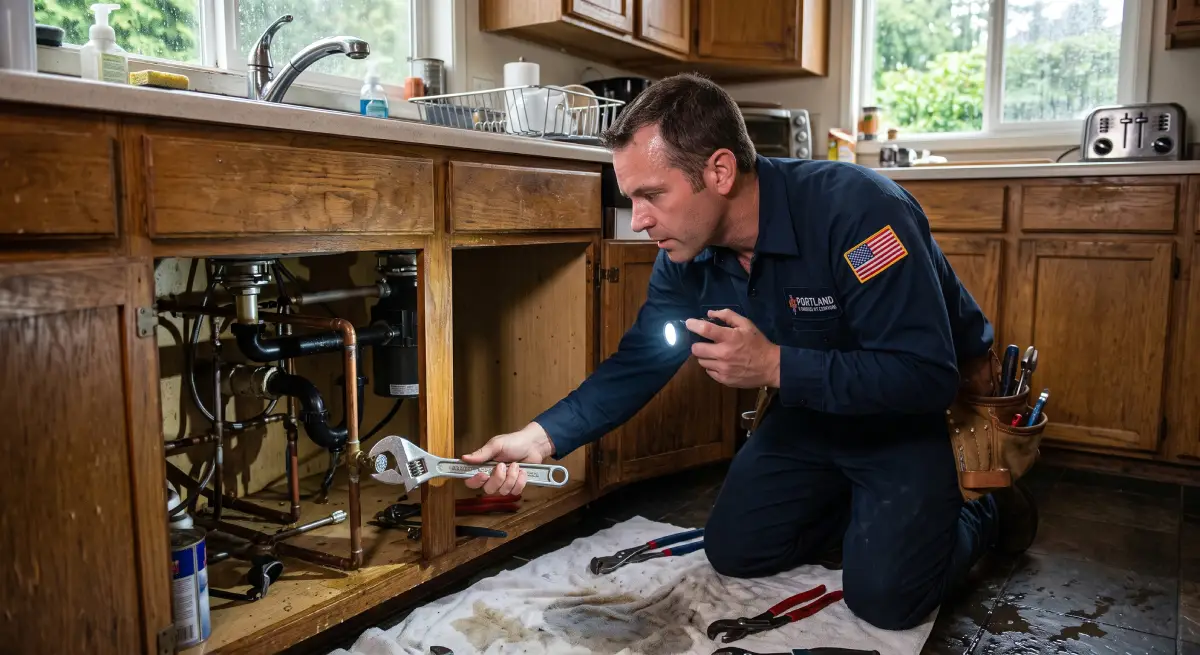
An emergency repair covers any issue that puts a tenant's safety, health, or the home's structure at immediate risk; think a burst pipe, a gas leak, or a total loss of heat in freezing weather. These situations can't wait for a Monday work order. When Portland's January 2024 ice storm hit, Portland Fire & Rescue responded to more than 1,000 water-related emergency calls in five days, most tied to pipes that froze and burst as temperatures swung.
That's how fast a winter storm turns into a costly crisis for owners without a response plan. This guide covers what qualifies, how we prioritize requests, and what happens once you hand the process to us.
Key Takeaways
- An emergency repair threatens tenant safety, health, or the property's structure and requires an immediate response.
- Oregon law gives tenants fast remedies when essential services like heat or water get cut off.
- We use a set spending threshold so small emergency fixes move forward fast without waiting on your approval.
- Clear tenant instructions and a 24/7 in-house team keep small problems from turning into expensive ones.
Emergency Repairs Cover Threats to Safety, Health, and Property Structure
A request becomes an emergency when it puts a tenant in danger, damages the property, or removes access to something the home legally must provide.
| Category | Examples | Why It's Urgent |
|---|---|---|
| Water and plumbing | Burst pipes, active flooding, sewage backup | Water damage spreads fast and gets costlier by the hour |
| Heat and cooling | No heat in freezing weather, failed AC in newer buildings during a heat wave | Loss of temperature control creates a direct health risk |
| Gas and electrical | Gas odors, exposed wiring, sparking outlets | Both carry a risk of fire or poisoning |
| Security | Broken exterior doors or locks | Tenants lose the ability to secure their home |
| Non-emergency | Leaky faucet, squeaky cabinet, minor drywall crack | Can wait for a scheduled visit |
Oregon has also widened its definition of habitability. Buildings permitted for construction on or after April 1, 2024 must provide working cooling in at least one room under ORS 90.320's current requirements, so a failed AC system during a Portland heat wave can now qualify as an emergency in newer properties.
Routine preventive maintenance and inspections catch a slow leak or failing valve before either one becomes an urgent call.
How Emergency Requests Get Prioritized
When a call comes in, our team runs through a quick assessment before dispatching anyone.
- Is anyone in immediate danger?
- Is water actively flowing or spreading?
- Is the home losing heat in freezing temperatures, or cooling in a newer unit built to that standard?
- Does the issue involve gas, exposed wiring, or a broken exterior lock?
- Based on those answers, we dispatch within the hour or schedule the next available visit.
That structure keeps genuine emergencies from getting stuck behind routine work orders. Owners who work with a professional property manager often say this triage step is the biggest relief, since most self-managing owners have no consistent way to sort an urgent call from a minor one at 11 p.m.
Our In-House Team Handles Most After-Hours Response
A dedicated after-hours line connects tenants directly to a technician, not a voicemail box checked the next morning. Our maintenance staff handles most emergency calls without routing them through an outside vendor's schedule first, and that distinction matters most in the middle of the night, when a pipe bursts and every additional hour adds to the damage.
Multnomah County recorded at least eight deaths during the January 2024 ice storm, a sobering reminder of how dangerous a heat failure becomes in real winter conditions. Fast after-hours dispatch isn't a bonus feature. It's the difference between a resolved problem and a dangerous one.
Authorization Thresholds Keep Repairs Moving Without Delay
We operate under a spending threshold set in your management agreement. Repairs under that amount move forward immediately, no phone call required, so a burst pipe gets shut off before it floods a second unit. Anything above that threshold, or involving a major system replacement, comes to you first unless waiting adds risk.
Oregon law backs this urgency. Tenants can give landlords a written 48-hour notice when an essential service like heat, water, or electricity fails, and if it's not restored in time for a serious threat, tenants can pursue substitute housing or a rent reduction.
That narrow window is why our process favors speed over a lengthy approval chain. Every dollar spent on your behalf shows up in your monthly financial reporting, so you always see what got fixed and what it cost.
Owner Notifications Happen as the Repair Unfolds
You shouldn't have to guess what's happening at your own property.
- You're notified when the issue is reported and confirmed as an emergency.
- You're updated once a technician is dispatched and the cause is identified.
- You receive a summary of the completed work, usually the same day for true emergencies rather than weeks later in a routine report.
We encourage owners to review the owner resources page for a full outline of how communication flows from our maintenance team to you during an active repair. Many owners also run their numbers through our return on investment calculator after a major repair to see how the work affects long-term property performance.
Vendor Dispatch Covers Specialized and Overflow Work
A few years ago, an out-of-state owner called us in a panic after her tenant reported no heat during a cold snap. Her previous management company had taken three days to send anyone. We had a technician on site within hours, restored heat before the pipes were at risk, and documented the repair by morning. She later told us that response changed how she thought about property management entirely.
That turnaround happens because our in-house technicians handle most emergency work, with trusted vendors on call for specialized jobs like major electrical or structural repairs. Vendors get looped in fast whenever a job needs licensing or equipment our team doesn't carry, so nothing sits waiting on a callback.
What We Ask Tenants to Do During an Emergency
Clear instructions prevent confusion at the worst possible time. We give every tenant this guidance.
- Call the emergency line right away for flooding, gas smells, no heat, or safety hazards
- Shut off the water main if a pipe bursts, if they know how
- Submit non-urgent requests through the online portal instead
- Never attempt electrical or gas repairs on their own
Tenants who understand this tend to report problems earlier, which limits damage before it spreads. Our tenant screening process factors in here too, since tenants with a track record of clear communication tend to follow instructions when it counts.
If a repair temporarily displaces someone from part of their unit, a few smart layout ideas can help them stay comfortable while work finishes up.
FAQs about Emergency Repairs in Portland, OR
Who pays if a tenant causes the damage that leads to an emergency repair?
Tenants are typically responsible for damage caused by their own negligence. We document the cause thoroughly, then bill the tenant directly or deduct the cost from their deposit, depending on your management agreement's terms.
What happens if an emergency repair reveals a larger problem with the rental property?
We stabilize the immediate emergency first, then notify you with details and repair options for the underlying issue. Larger problems like aging plumbing or electrical systems get scheduled as separate, planned repairs with your approval.
Could an emergency repair become the owner's responsibility even if the tenant failed to report the problem promptly?
Yes. Oregon habitability law places maintenance duty on the owner regardless of reporting delays. We still document the timeline, since it can affect liability if damage worsened before the tenant notified us.
How are emergency repair costs handled when the property has an active home warranty or insurance policy?
We complete urgent repairs first to prevent further damage, then file the warranty or insurance claim afterward. Reimbursed amounts get credited back to you through your monthly financial reporting.
What documentation should Portland rental property owners keep after an emergency repair?
Keep the tenant's original report, timestamped photos, the technician's invoice, and our repair summary. This record protects you in disputes and supports insurance claims or future habitability questions.
Performance Properties Keeps Your Portland Rental Protected
Emergency repairs test whether a property management system actually holds up when it counts. A fast, well-documented response protects tenants, limits damage, and keeps a rental performing the way it should. At Performance Properties, our 24/7 in-house maintenance team, clear authorization thresholds, and proactive owner communication are built for exactly these moments.
If you want a maintenance partner who treats your property like their own, see how we handle everything from burst pipes to full-scale repairs, including:
- Round-the-clock emergency dispatch
- In-house technicians for faster, lower-cost repairs
- Transparent owner notifications and billing
- Preventive inspections that catch problems early
Emergencies don't wait, and neither should your property's protection. Talk to Performance Properties today and explore our maintenance services to get a 24/7 response plan built around your Portland rental.